
Rules notebook
Blackjack 3:2 versus 6:5: read the payout rule
 Partner offers · Country: United KingdomUpdated 11 November 2026
Advertising. Bonus amounts, ratings and review counts are supplied by advertisers and have not been independently verified. Check eligibility and current terms with the operator. 18+. These international campaigns have no dedicated GB offer; GB availability has not been confirmed.
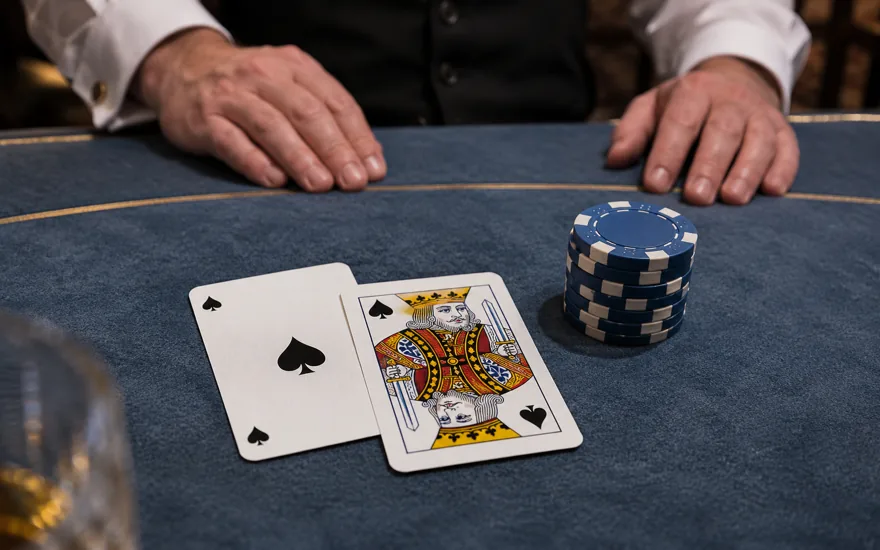


The blackjack payouts 3 to 2 and 6 to 5 describe the profit on a qualifying natural. On a hypothetical £10 stake, 3:2 pays £15 profit and 6:5 pays £12 profit. The original stake is returned separately when that natural wins.
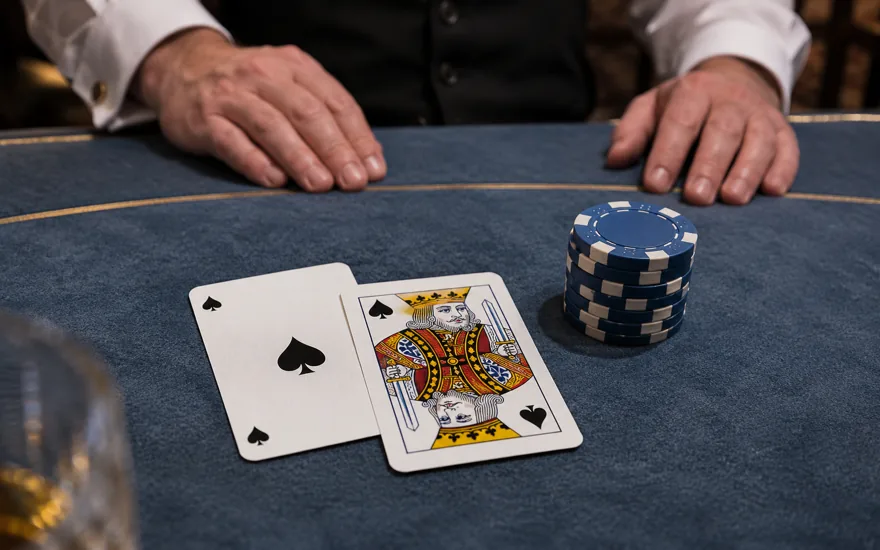
Identify the hand that qualifies
A natural blackjack is the initial ace and ten-value card under the game's rules. A hand reaching 21 after drawing another card is a different hand. A two-card 21 created after splitting may also have different settlement rules.
Read the particular table's rules, including what happens when the dealer also has blackjack. This comparison assumes a qualifying player natural that wins. It is not a statement that every displayed 21 receives the special payout or that the player always wins against the dealer.
Separate profit from the total returned
A 3:2 payout means three units of profit for every two units staked on the qualifying outcome. A 6:5 payout means six units of profit for every five staked. The returned original stake is separate from those profit figures.
Using a hypothetical £10 stake makes both ratios easy to compare. The difference is £3 for that winning natural, not £3 on every hand. A game with no qualifying natural during a particular sequence does not produce that payout difference in the same way.
| Hypothetical £10 qualifying natural | Profit | Stake returned | Total received |
|---|---|---|---|
| 3:2 | £15 | £10 | £25 |
| 6:5 | £12 | £10 | £22 |
| Difference on this outcome | £3 | No difference | £3 |
An ordinary win has a different settlement
Standard blackjack rules commonly pay an ordinary winning hand at even money. That is separate from the natural-blackjack ratio and from insurance or other side bets. Do not apply the 3:2 figure to every hand that beats the dealer.
Side bets have their own qualifying patterns and paytables. A large displayed side-bet payout should not be combined with the main-hand ratio to describe a guaranteed return. Keep each stake and settlement line separate when reading a round history.

One ratio cannot describe the whole game
The blackjack payout is one rule among several. Dealer behaviour, deck arrangement, doubling, splitting and other conditions also affect the game. An exact theoretical return cannot be responsibly calculated from the natural payout alone without the rest of the rules and assumptions.
If two games differ in several ways, say so rather than attributing every mathematical difference to 3:2 or 6:5. The game-rules hub explains how to identify the particular version. Published rules from another country are evidence of a settlement definition, not availability at a British operator.
A better payout does not promise a winning session
For the same qualifying stake and outcome, 3:2 returns more profit than 6:5. That arithmetic does not determine which cards will be dealt or whether a session ends ahead. Increasing stakes does not remove the possibility of loss.
Do not borrow money or raise stakes to compensate for a lower payout. If play is becoming an attempt to recover earlier losses, use safer-gambling help. A clear understanding of a ratio is useful, but it is not an income plan.
If the round was settled differently
Retain the round identifier, main stake, cards shown and the applicable table rules. Check whether the hand was a natural, a split hand or a push before reporting a discrepancy. Ask the operator to explain the specific settlement line.
A correct game settlement and a delayed withdrawal are different questions. Use pending-withdrawal guidance if the money remains in the account, or missing-payment guidance once an outgoing transfer is confirmed. A payout ratio cannot establish where a bank transfer went.
Compare the model or a special hand separately
A natural’s payout is one input to a full blackjack return model. A five-card hand and soft eighteen raise different rule questions. An event leaderboard adds scoring rules rather than changing every ordinary table into a tournament.
Put both ratios over the same stake before comparing them
The numbers in a payout ratio are not two separate amounts to add. Three to two means three units of profit for two units staked on the qualifying winning outcome. Six to five uses a different stake denominator. Comparing the first numbers alone would therefore compare unlike quantities.
For an invented token exercise, use a ten-token qualifying stake. Three to two gives fifteen tokens of profit; six to five gives twelve. Both calculations use the same original ten tokens. Their different profit amounts arise from the ratios, not from changing the amount exposed to the outcome.
The exercise can be scaled without changing its meaning. A five-token qualifying stake produces half those profit amounts. That arithmetic does not establish which stake sizes a real table permits, how fractional credits are treated or what currency a particular account uses. Those are separate configuration questions.
Putting both ratios over the same stake lets you compare the paytables fairly. A larger numerator alone does not mean a better payout. It also gives support a calculation to check: identify the qualifying stake, apply the stated ratio and add any original stake that is returned separately.
Follow one hypothetical winning natural through the ledger
To follow the accounting, suppose a record starts with twenty tokens, then accepts a ten-token main stake. A qualifying winning natural is later settled at three to two. The stake deduction and the final credit may appear separately, so looking only at the last entry can hide the money already taken from the balance.
If the final credit includes the original ten-token stake and fifteen-token profit, it totals twenty-five tokens. The account then contains thirty-five tokens, assuming no other activity. The net increase from the starting twenty is fifteen, which matches the profit calculated from the payout ratio.
Under the same invented bookkeeping with six to five, the final credit would total twenty-two tokens and the ending balance would be thirty-two. The three-token difference belongs to this particular qualifying outcome. It is not a charge applied to every hand in the sequence.
Real history screens may label entries differently. Do not insist that every service must use the invented display arrangement. Instead, reconcile the amount reserved, the amount returned and the net balance change using the actual record. Equivalent accounting can be displayed in more than one way.
A two-card total of twenty-one needs its hand history
Card values alone are not always sufficient to classify the settlement. An original ace with a ten-value card is the familiar natural-blackjack pattern, but a similar-looking pair of cards can arise after an action such as splitting. The applicable table rules determine how that later hand is treated.
For a hypothetical reading exercise, compare two records ending with ace and king. The first received those cards as its initial hand. The second received an ace after another hand was split. A screenshot containing only the final cards can make the records look identical while omitting the distinction relevant to settlement.
The useful evidence is therefore the sequence as well as the final total. Retain the original deal, any split instruction and the identifier for each resulting hand. Ask which classification the table applied rather than assuming that a visible total of twenty-one proves eligibility for the natural payout.
The published Grosvenor All Bets Blackjack RNG rules show why the version matters: they distinguish a split-hand twenty-one from blackjack. That is evidence for that named product's treatment of the hand. It does not establish the rule for every blackjack variation or confirm availability in a particular account.
An ordinary twenty-one is not a second payout label
Three cards can total twenty-one without creating an original two-card natural. An illustrative hand of seven, six and eight demonstrates the arithmetic. Its numerical total is twenty-one, but the card count and route to that total differ from an initial ace and ten-value card.
When a headline says blackjack pays three to two, check which hand it means. The ratio applies to the qualifying outcome defined by the rules. It does not normally multiply the payout on every hand that happens to total twenty-one; the complete paytable determines how those other hands are settled.
Nor does a five-card nickname automatically replace the natural rule. A special Charlie condition needs its own written eligibility and priority. A game can omit such a rule or use a different card-count condition. The five-card article examines that separate question without merging it with this ratio comparison.
When a history labels a result simply as twenty-one, locate the more detailed record before concluding that a ratio was ignored. The event name may describe the total without fully describing its classification. A precise enquiry identifies both what cards were held and how the hand came into existence.
Dealer blackjack can change the relevant settlement question
This comparison assumes that the player’s qualifying natural is a winning outcome. If the dealer also has blackjack, the applicable rules determine the settlement instead. The result cannot be calculated responsibly by multiplying the player’s stake before checking whether the qualifying outcome actually won.
In a hypothetical dispute, a reader might present an ace and queen and expect the three-to-two profit. If the complete record also contains a dealer natural, the missing fact is the rule governing that situation. The visible player hand alone does not establish the credit that should follow.
The timing of a dealer check can also affect what is visible during a round. Do not infer the final status from an animation occurring before all required checks finish. A pending display, a provisional hand label and a completed settlement entry can refer to different stages of the same round.
When asking support, use the wording from the exact version's rules. Identify the player natural, the dealer's final hand classification and the provision governing their settlement together. That lets the team check the event without assuming that the special payout applies regardless of the dealer's hand or before the round is complete.
Insurance has its own stake and cannot be folded into the ratio
An insurance entry concerns a separate wager under the particular table’s rules. Its existence does not change three to two into a new main-hand ratio. To understand a round containing insurance, keep the initial main stake and the additional insurance stake on separate accounting lines.
For an invented illustration, suppose a main-hand result and an insurance result move the balance in opposite directions. Adding their credits without their stakes would make the round appear more profitable than the complete record shows. Likewise, looking only at the main outcome would omit the separate money exposed.
This guide does not recommend taking insurance or assign it a return figure. The purpose is to prevent a distinct wager from being mistaken for the settlement of a natural. Its eligibility, stake definition and payout must be read in the relevant product’s own information.
If support supplies a combined total, ask for the breakdown rather than reverse-engineering it from a screenshot. One completed round can contain several settlements. The label three to two remains a statement about the qualifying main-hand outcome, not a convenient explanation for every credit posted at the same time.
Multiple hands need separate identities
Playing more than one position or creating split hands can produce several simultaneous records. Each has its own stake, cards and classification. A combined balance change does not show which individual hand received a natural payout, an ordinary win, a push or a loss.
Consider an invented three-position record with one qualifying natural, one ordinary win and one loss. Applying the natural ratio to the combined stakes would wrongly treat all three positions as the same outcome. Calculate each recorded settlement using its own qualifying condition, then combine the resulting net changes.
The order in which the interface displays credits may not match the visual order of positions on the table. A reference identifying the hand is stronger evidence than assuming the first credit belongs to the leftmost position. Preserve both the parent round and any available hand-level identifiers.
For a discrepancy enquiry, point to one hand at a time. State its original stake and the specific classification being questioned. This prevents an unrelated losing position or a separate side wager from hiding the particular amount whose calculation needs explanation.
Credit values and currency conversion need their own record
A table showing credits may require a conversion before its payout can be compared with a sterling balance. Identify what one credit represents in that installation. A ratio applied to ten displayed credits cannot automatically be read as a ratio applied to ten pounds.
If the account and game use different units, retain the conversion information actually shown. Do not borrow an exchange rate from a different time or service to explain the game’s own ledger. The currency-cost guide separates such conversion questions from the classification of a blackjack hand.
Fractional units also need the configured table's own rule. If applying a ratio produces part of a credit, ask how that fraction is recorded and settled. There is no universal rounding policy asserted here for every credit value, stake or operator, so an unexplained difference should not be rounded away by guesswork.
The important order is classification, qualifying stake, ratio, returned stake and unit conversion. Jumping directly from a card screenshot to an expected sterling credit can skip more than one necessary step. A complete sequence makes the source of any disagreement much easier to locate.
A payout comparison is narrower than a table recommendation
For the same winning natural and qualifying stake, the two ratios can be compared exactly. That does not establish which complete table offers a higher theoretical return when other rules differ. Dealer procedure, deck composition and permitted actions belong to the fuller model.
The distinction prevents a common overstatement. A page might correctly calculate the extra profit on one natural and then describe that difference as a guaranteed improvement on every hand. The first claim is conditional arithmetic; the second introduces a prediction which the calculation does not support.
The blackjack RTP article explains why a model needs the rule set and decision assumptions together. This page deliberately isolates one settlement term. Keeping the narrower comparison intact helps the reader understand a paytable without pretending that a single ratio certifies the entire game.
An unattractive ratio also does not justify larger stakes elsewhere. Money exposed remains money that can be lost. Understanding the settlement can inform a decision not to participate; it does not create a duty to find another table or recover a perceived difference through additional play.
A screenshot should retain the condition beside the number
When saving the rules, include the words identifying which outcome receives the ratio. A crop showing only three to two may omit a qualification, a hand category or the distinction between main and side wagers. A larger image still cannot answer the question if that deciding condition is outside the frame.
Also retain the exact game title and provider when available. Different releases can share a similar table background or dealer presentation. The artwork is an identification clue, but it is not stronger evidence than the version name and its published rule panel.
For a factual correction to this publication, a public source reference and a description of the disputed wording are enough. Do not send bank passwords, account credentials or full identity documents. Such private information does not help establish whether a ratio has been explained correctly.
The contact guidance distinguishes an editorial query from an operator account case. This site cannot retrieve a private hand history or change its settlement. A support request about an actual account belongs with the organisation holding the round record.
Interrupted play should be checked against the completed history
A dropped connection can leave a player seeing an unfinished animation or an old balance. That observation does not by itself establish the final outcome. Locate the completed history entry and the relevant round reference before comparing the amount credited with the payout ratio.
An interruption can raise questions about whether a stake was accepted, whether a hand completed and whether a result was posted. Those questions have an order. A natural-payout calculation only becomes relevant once the accepted stake and the qualifying completed outcome are established.
Do not place another wager to test whether the earlier credit appears. A new round creates a new identifier and can make reconciliation harder. Keep the original observation and use the genuine support route to ask for the event’s final status.
The applicable rules and completed record determine what an interruption means for refunds or cancellation; this guide does not promise either treatment. An unfinished display alone cannot show whether a qualifying natural was eventually paid correctly. Establish the hand's final status before using its payout ratio to challenge a credit.
Separate a disputed game credit from a later withdrawal
A correct blackjack settlement increases the relevant account balance; a later withdrawal is another instruction. The ratio does not prove that this instruction was created, approved or sent to a bank. Each stage needs its own identifier and current status.
Suppose an invented account record correctly credits a natural, but a subsequent withdrawal remains awaiting action. Recalculating the natural again does not identify the payment’s stopping point. The useful evidence is now the withdrawal entry and the receiving route, not the original cards alone.
Conversely, a completed withdrawal does not prove that every earlier hand was settled correctly. A game-credit dispute can remain specific to its round even when other money has moved. Keeping the two records distinct prevents one event from being used as evidence for an unrelated conclusion.
Use the cashier hub when the issue concerns the movement of money. Use the game’s own history when the issue concerns the hand. Neither investigation requires more gambling, and neither should be presented as an opportunity to win back an amount still being disputed.
Finish with a reproducible settlement question
A useful final note names the table, the hand reference, the original main stake, the qualifying cards and their origin, the dealer classification, the stated ratio and the credit recorded. Another reader should be able to follow the calculation without guessing which stake or hand the figures concern.
Name the missing information. You may need the split-hand rule, confirmation that the original stake was included in a credit, or the value of the unit displayed. That specific gap gives support something to explain; a combined balance that differs from your expectation does not by itself establish that the whole game is wrong.
If the documents show that the original assumption was mistaken, correct the calculation rather than searching for a more favourable interpretation. A fair reading can confirm an ordinary settlement just as readily as it can identify a question worth escalating through the operator’s process.
The endpoint is an understood ratio and a complete record. It is not a promise of future profit, a recommendation to continue playing or a claim that a higher natural payout will repair previous losses. A reader can use this comparison without making a new gambling transaction.
Questions that follow
How much does a £10 blackjack pay at 3:2?
For a qualifying winning natural, £15 profit plus the £10 returned stake: £25 total.
How much does £10 pay at 6:5?
For the same qualifying outcome, £12 profit plus the £10 returned stake: £22 total.
Does any hand totalling 21 get 3:2?
No. A natural, a drawn 21 and a hand after splitting can have different treatment under the particular rules.
Does 3:2 guarantee a better session result?
No. It pays more on the qualifying outcome, but does not determine the sequence of cards or guarantee profit.
Sources & review
Published-source references, with check dates where recorded. No personal deposits, withdrawals or gameplay tests are claimed. Images illustrate the subject; they are not evidence of a tested account.