
Cashier fieldnotes
Online casino credit card deposits: the GB answer
 Partner offers · Country: United KingdomUpdated 11 November 2026
Advertising. Bonus amounts, ratings and review counts are supplied by advertisers and have not been independently verified. Check eligibility and current terms with the operator. 18+. These international campaigns have no dedicated GB offer; GB availability has not been confirmed.
Online casino credit card deposits are not permitted in Great Britain. The restriction also covers credit-card money routed through an e-wallet or money-service business. A Visa or Mastercard logo does not override the distinction between a debit card and a credit card.
Can you make an online casino credit card deposit in GB?
The Gambling Commission’s credit-card restriction came into force on 14 April 2020. For a consumer considering an online casino in England, Scotland or Wales, the direct answer is that a credit card is not an accepted funding route under that restriction. It is not merely a failed promotional qualification.
This is a different question from whether a card is genuine, authenticated or within its bank limit. A successful identity check or security challenge cannot make a prohibited funding source eligible. Repeatedly attempting the same instruction does not change the applicable payment rule.
The Commission describes limited lottery exceptions in its wider guidance. Those exceptions should not be turned into an online-casino exception. This article concerns the casino-payment question; it does not offer a route for using borrowed card funds through a different product.
A card network is not a funding type
Visa and Mastercard describe payment networks used by different card products. The same network logo can appear on a debit card and a credit card. A website displaying a network badge therefore does not establish that it accepts credit-card gambling payments.
Identify the actual product using the issuer’s documentation or the bank’s secure support service. Do not post a full card number or an image of both sides to ask strangers for help. A general payment-method list is not a substitute for knowing the type of card held.
Our debit-card note explains authorisation and payouts for a different funding route. That explanation is not an instruction to replace a protective restriction or borrow elsewhere. A payment problem should first be identified accurately, without changing the source simply to make a transaction pass.
| What is shown | What it establishes | What it does not establish |
|---|---|---|
| Visa / Mastercard logo | A card network | Credit-card gambling eligibility |
| Debit / credit product type | The product being funded | Acceptance by every operator |
| Wallet balance | Money held in an intermediary | Eligibility of every funding source |
Wallets do not remove the origin of the money
The Commission’s guidance on money-service businesses extends the rule to credit-card gambling funds passed through wallets and similar intermediaries. Operators must not accept payments through a service unless the required prevention of credit-card gambling funding is in place. A wallet label is not an exemption.
This explains why an available wallet balance and an eligible gambling balance may be different concepts. A wallet can support ordinary purchases without every funding source being available for gambling. The relevant question is not only whether money appears in the wallet, but whether that money is eligible for the particular merchant use.
Do not shuffle money between services to defeat a refusal. If a wallet declines a gambling payment, ask the wallet what restriction applies through its genuine support channel. Do not rely on a supposed workaround supplied by a message, an offshore list or a link asking for account credentials.
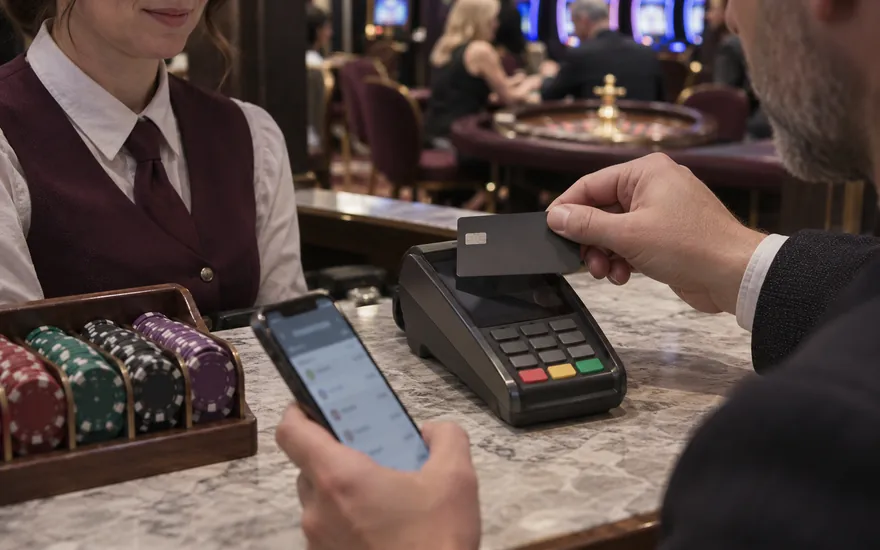
Separate a policy refusal from a missing payment
A refusal concerns whether an instruction was accepted. A pending bank entry may instead be an authorisation reservation, while a completed debit without matching credit needs reconciliation. Those states are different, even if the cashier used the same short error message in more than one case.
Check the bank or wallet record before making another attempt. Record the amount, time, status and reference, then compare the operator’s cashier history. Do not assume a pending entry is a completed loss, or that another payment is needed to unlock the first one.
Use deposit declined when the instruction was refused and deposit pending when the records do not yet match. Those pages investigate the transaction stage. This page answers the separate question of credit-card eligibility in Great Britain.
| Record state | Next factual question |
|---|---|
| Declined | Was any instruction accepted or money reserved? |
| Pending | Is this an authorisation rather than settled debit? |
| Settled debit; no casino credit | Which transaction reference reconciles the two records? |
What to ask the bank, wallet or operator
Ask which product or funding source was identified and whether the instruction was declined, reserved or settled. Ask for a transaction reference appropriate to that stage. A clear status can prevent a complaint about missing money from being confused with a request to approve an ineligible payment.
Do not send a PIN, security code, one-time passcode or banking password in an ordinary support message. Use the institution’s established secure route if evidence is required. A request to pay a release fee, make another deposit or supply a remote-access session should be treated with caution.
Keep the support message about the identified payment: give the reference, describe the difference between the records and ask what happened. You do not need to publish a full statement to frame that question. If the institution needs a document, ask which fields it must see and use its genuine secure process. Hide unrelated activity only where that process allows redaction, while leaving the relevant entry readable.
Why an international list can give the wrong answer
A page about card deposits can describe a different jurisdiction, currency or product. A dollar-denominated payment table is not evidence of a route available to a person in Great Britain. Likewise, an old article can predate a rule that now governs the transaction being considered.
Check the territory and date before treating a list as a factual answer. The relevant distinction is not whether the article contains the word casino, but whether its claimed acceptance applies to this payment, this product and this market. A payment badge alone supplies none of those details.
This publication does not maintain a list of credit-card casinos for British consumers. The primary-source answer is the restriction itself. Our payment-method hub instead separates legitimate route descriptions, directions and records without claiming that every named service is accepted by every operator.
If the payment worry is linked to borrowing
A restriction is not a reason to seek another loan or increase money exposed to gambling. If a payment is being attempted to recover an earlier loss, pause before making another financial decision. A new deposit cannot guarantee recovery or establish what happened to an old transaction.
Spending controls and a payment investigation serve different purposes. Keeping the restriction in place does not prevent someone from asking for a factual explanation of an existing debit. A bank or operator can address the record without a consumer resuming play.
The support page lists independent starting points for gambling concerns. For a disputed or unrecognised debit, contact the relevant financial provider through its genuine channel. This article neither promises recovery nor supplies a way to bypass a payment block.
Check the card product as well as the network logo
A payment-network logo does not tell you whether the instrument is debit or credit. The network and the funding product describe different features. Read the actual account or card type through the genuine issuer information, rather than assuming that every card carrying the same badge has the same relationship to borrowed money. A list of supported card brands is therefore not a complete answer to a credit-card casino funding question.
For Great Britain, check the credit-card gambling restriction and the Commission's guidance about funds passed through wallets. An international card-acceptance page does not establish a British funding option. Read which country, card product and direction it covers before using its answer. It may describe another market or a transaction other than a casino deposit. Keep the source with that context rather than applying its acceptance claim to every card with the same logo.
If the product type is unclear, ask the issuer to identify the instrument rather than sending a deposit to see whether the cashier accepts it. Technical acceptance of an instruction would not by itself establish that the route was appropriate. A reader can clarify the funding product without creating a new gambling transaction, sharing security codes or trying several connected cards until one produces a different message.
An available debit balance is not a gambling budget
Distinguishing a debit card from a credit card does not make every debit-card deposit affordable. A displayed available balance is an account observation, not a gambling budget. Consider money needed for bills and other commitments independently of what a payment interface permits. The absence of the specific credit-card restriction is not a recommendation to use the alternative instrument or increase the amount at risk.
Nor should the amount available on another account be treated as a way to complete a refused credit-card request. If a spending control, gambling block or self-exclusion is relevant, respect that boundary. The deposit-limit guide explains how to read personal controls. A method's technical range and a person's decision about what they can afford to lose remain different questions.
You can stop after identifying the restriction; there is no need to choose a replacement method or make another deposit. If you are tracing money already attempted, keep its records and follow the relevant investigation route. A different method being available does not explain the earlier payment. This page answers whether credit-card funding is permitted, while the separate transaction guides help establish what happened to an existing debit, reservation or return.
A wallet stage does not erase the origin of the funds
A money-service business can sit between a card and a gambling merchant, but the additional account name does not make every funding source interchangeable. The Commission's wallet guidance is relevant to preventing credit-card funds reaching gambling through that extra stage. Do not present a wallet logo as a route around the restriction or as proof that an underlying card source no longer matters.
Read the actual source selected for the proposed wallet instruction. An instrument used for an earlier ordinary purchase may not answer the question about a gambling payment. If the source or eligibility is unclear, ask the wallet through its genuine support process. Do not experiment with repeated loads, transfers or another person's account to discover a way of making borrowed funds reach a casino.
The PayPal page and Skrill page separate their funding and receiving records. That separation is useful without claiming that every account can use every merchant. A question about the source of a deposit is different from a question about an existing wallet payout. Keeping the two apart avoids a fresh payment being introduced while an earlier transfer is still unresolved.
Read a refusal without assuming money was or was not taken
A cashier refusal is an event that should be compared with the funding account's record. If no relevant entry exists, the enquiry concerns the unsuccessful request. If an unresolved entry exists, ask the provider what its status means. If a completed debit exists without a casino credit, request reconciliation of that instruction. The word refused should not replace all three possible descriptions.
Do not interpret an available-balance change alone as a completed gambling payment. Inspect the individual entry, including the amount, currency, merchant description and reference. A pending record can be different from a posted charge, and a later release can be different from a merchant refund. The pending-deposit guide explains the evidence needed to preserve those distinctions without inventing a universal release period.
If the request was attempted through a wallet, identify which leg has an entry. Funding of a wallet and the wallet's merchant payment can be separate instructions. A card-side record does not automatically establish that the casino received money. Ask each organisation about the record it controls rather than describing the entire journey as one accepted credit-card casino deposit without evidence.
Do not confuse an incoming refund with a new gambling deposit
A returned payment, a card refund and a casino withdrawal concern money moving in different directions from a new deposit. Their records and receiving arrangements should be identified separately. Do not infer that an incoming amount means the same card is an acceptable funding source for future gambling. A receiving event answers what happened to that instruction, not whether another outgoing payment should be made.
If a card record shows an incoming adjustment while the operator still labels the deposit failed, ask the issuer what the adjustment represents. Then ask the operator how it relates to the original request. A restored balance and the entry that restored it are not two independent recoveries. Nor does an incoming credit, or a later successful transaction, change the classification of the card used for the original attempt. Keep each event attached to its own reference.
The refund guide separates pending entries, completed charges and returns. If a withdrawal is already described as sent but not received, use the receiving-stage guide with its actual destination and reference. Those routes should not be replaced by another deposit attempt simply because the account screen displays the same network logo in several places.
Check which country, product and payment a source covers
An operator or provider may publish several country-specific help pages under a similar design. Inspect the market and currency context before treating an international card list as evidence for Great Britain. A generic description of a network can also cover several funding products. Preserve the scope of the source instead of turning a broad acceptance statement into a precise claim that British credit-card casino deposits are available.
A description of an ordinary shop purchase may not explain a gambling payment either. Check the product and merchant context covered by the source. If a transaction label is unclear, ask the genuine bank, wallet or operator to identify its own record; this guide cannot assign a payment code to an account it cannot inspect. Uncertainty about a label does not make it appropriate to work around a restriction or retry through a different account.
When a source does not cover the actual question, leave the condition unconfirmed rather than filling the gap with another country's numbers. The payment hub applies the same discipline to all methods: country, direction, account and currency are separate checks. An honest unanswered question is more useful than an apparently complete facts table assembled from products that cannot be compared on the stated terms.
Ask the bank, wallet and operator about their own records
Ask the issuer what card product was used and what its entry or refusal means. Ask the wallet which funding source and status belong to its instruction. Ask the operator about the deposit request, account credit or selected withdrawal destination. Keep those answers together, but do not ask one organisation's general reply to stand in for another's missing record. Each needs the reference and question relevant to the stage it can investigate.
Keep the request reference, external payment reference and support ticket under their own labels. An internal casino number may help the operator find its ledger without giving a bank an incoming or outgoing payment to trace. If a reference is unsuitable, ask which system it identifies and what information is available for the relevant recipient. Do not interpret an unsuccessful search with the wrong identifier as proof of a particular outcome.
For an existing disputed entry, lead with the amount, currency, date and observed status rather than asking how to make a fresh credit-card deposit succeed. The useful question is what happened to the actual instruction. A new payment, profile change or additional account cannot establish that record retrospectively and can create another event requiring its own explanation.
Protect account access while sharing payment evidence
A payment enquiry does not require giving a casino support agent access to a card or bank account. Do not send passwords, security codes, recovery information or remote access to somebody offering to identify the funding product. Use the issuer's genuine authenticated process. If a document is requested, ask which fields are necessary and submit it through the relevant secure channel.
Keep unrelated financial details out of ordinary public messages. A complete statement can reveal balances, other merchants and personal information that do not help identify the payment in question. The verification guide explains how to ask what a document must establish. Do not remove the facts being checked or alter the underlying record; obtain an appropriate account-specific process instead.
If the original screen is no longer available, describe that limitation honestly and ask the institution to identify its record using the information you retain. Do not recreate a confirmation screen or repeat a payment to obtain a more convenient screenshot. An accurate statement of what was observed, what is documented and what remains unknown is more useful than evidence manufactured after the event.
Keep borrowing concerns separate from payment troubleshooting
If gambling has become tied to borrowing, stop the proposed payment rather than looking for another source of funds. The safer-gambling page links to independent starting points for gambling concerns. This publication does not lend money, manage debt or approve changes to an account. You can seek support while keeping a separate, factual enquiry open about money already paid; neither task requires another deposit or an attempt to defeat the restriction.
Resolving an existing deposit or withdrawal enquiry can proceed without further gambling. Preserve the records and ask the responsible organisation about the specific amount. Do not increase a wager, send another deposit or open another payment account in an attempt to recover money or make an unclear balance look right. A new game result cannot establish what happened to an earlier funding instruction.
Keep personal limits, bank gambling blocks and self-exclusion separate from the technical case outcome. An explanation that a method is available or a record is resolved does not require those controls to be removed. You can leave the account unused and stop gambling. A clear account of an existing payment is valuable precisely because it does not depend on sending more money through another route.
Record what happened without treating it as future permission
The final record should identify the actual outcome: no completed debit, a released pending entry, a returned payment, a credited merchant deposit or another supported explanation. Do not use the broad conclusion card worked to describe several different events. A later incoming adjustment or successful transaction through a different product does not change the classification or status of the original instruction.
Keep the final explanation with the relevant references and the original source of the product information. If the operator's request and funding account have different labels, preserve the explanation connecting them rather than deleting the earlier history. A future statement review should be able to distinguish that resolved case from a new entry with a similar amount or merchant description.
You do not need another casino payment to check the explanation. Keep the result focused on the card product involved and what happened to the existing instruction. It is not permission for future credit-card gambling, an invitation to borrow or a promise about another method's payout time. If something remains unexplained, name that specific point and take it through the responsible organisation's genuine support or complaints process, keeping the original references with the enquiry.
If you retain a note of the funding product, include the issuer's description and the date it was checked. A network badge copied from a website is weaker evidence than the account's actual product information. When the instrument changes, review that new information independently instead of assuming that the old classification applies. This is an account-identification task that can be completed without a gambling deposit and without sharing the full card details publicly.
Questions that follow
Can I deposit at a GB online casino with a credit card?
No. The Gambling Commission’s restriction prevents that funding route.
Does PayPal make credit-card gambling funds acceptable?
No. The restriction also concerns credit-card money routed through wallets and money-service businesses.
Does a Visa badge mean credit cards are accepted?
No. The network can be used by different card products; debit and credit remain different.
What if a refused payment still appears in my bank record?
Check whether the entry is pending or settled and retain its reference. A refusal and a completed debit need different investigations.
Sources & review
Published-source references, with check dates where recorded. No personal deposits, withdrawals or gameplay tests are claimed. Images illustrate the subject; they are not evidence of a tested account.
- www.gamblingcommission.gov.uk/licensees-and-businesses/guide/preventing-credit-card-use
- www.gamblingcommission.gov.uk/licensees-and-businesses/guide/page/credit-card-payments-made-through-money-service-businesses
- www.gamblingcommission.gov.uk/news/article/protecting-consumer-safety-is-at-the-heart-of-credit-card-gambling-ban