
Cashier fieldnotes
Casino payment verification: what each document establishes
 Partner offers · Country: United KingdomUpdated 11 November 2026
Advertising. Bonus amounts, ratings and review counts are supplied by advertisers and have not been independently verified. Check eligibility and current terms with the operator. 18+. These international campaigns have no dedicated GB offer; GB availability has not been confirmed.

Casino payment verification can concern who you are, who owns a payment account or a specific transaction. Ask which question the operator needs to answer before submitting documents, and use its secure evidence channel.
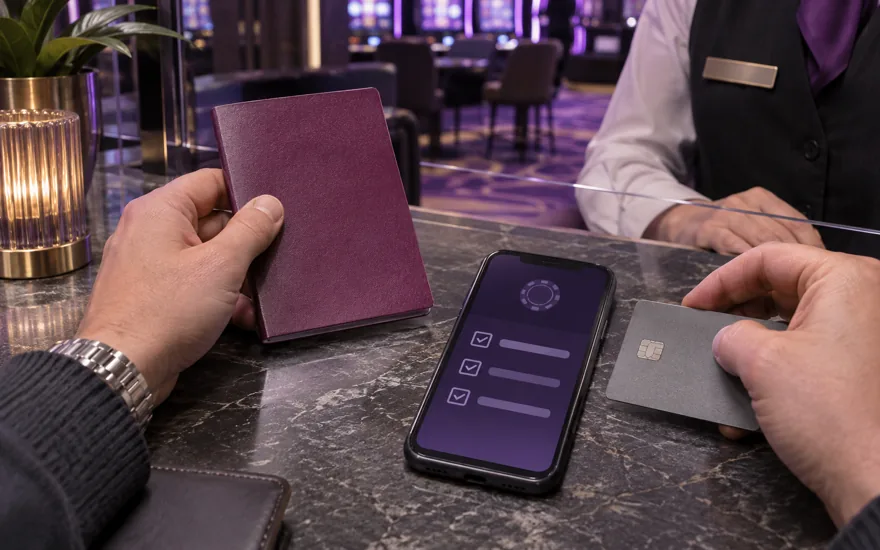
Identity and payment ownership answer different questions
Identity evidence establishes the gambling-account holder. A card or bank document may instead connect that person to a payment source or receiving account. A transaction record shows whether a particular transfer occurred. One document does not necessarily answer all three questions.
Ask for a precise list of accepted documents and the fields that must remain visible. The operator should explain the secure submission route. Do not send an entire financial history in ordinary chat merely because a generic message asked for verification.
| Question | Possible evidence category | Keep the purpose clear |
|---|---|---|
| Who holds the gambling account? | Identity or address evidence specified by the operator | Identity rather than payment status |
| Who owns the receiving account? | Account-ownership record | Ownership rather than proof of receipt |
| Did the transfer occur? | Redacted transaction entry and reference | Payment status rather than identity |
| Why was a new route selected? | Replacement or closure information | Explain the change without using another person’s account |
Could the operator have asked for this earlier?
British operators must verify relevant customer identity information under their requirements. Commission guidance says a withdrawal should not trigger information requests that could reasonably have been made earlier. Delaying an already foreseeable check until money is requested is different from investigating a newly arising issue.
Further information can still be necessary in particular circumstances. Ask why the evidence is needed now and which outstanding issue it addresses. A specific explanation is more useful than an unsupported promise that every withdrawal should be document-free.
Submit through the genuine secure channel
Open the operator from a known app or saved address, then use its stated upload process. Check that the requested evidence matches the message in the account. Avoid uploading documents through an unexpected link sent by an unknown social-media profile.
Never provide a bank password, card PIN, security code or one-time authorisation code to support. Where redaction is allowed, hide unrelated transactions and unnecessary account details. Preserve the fields the operator explicitly needs to establish ownership, otherwise it may be unable to assess the document.
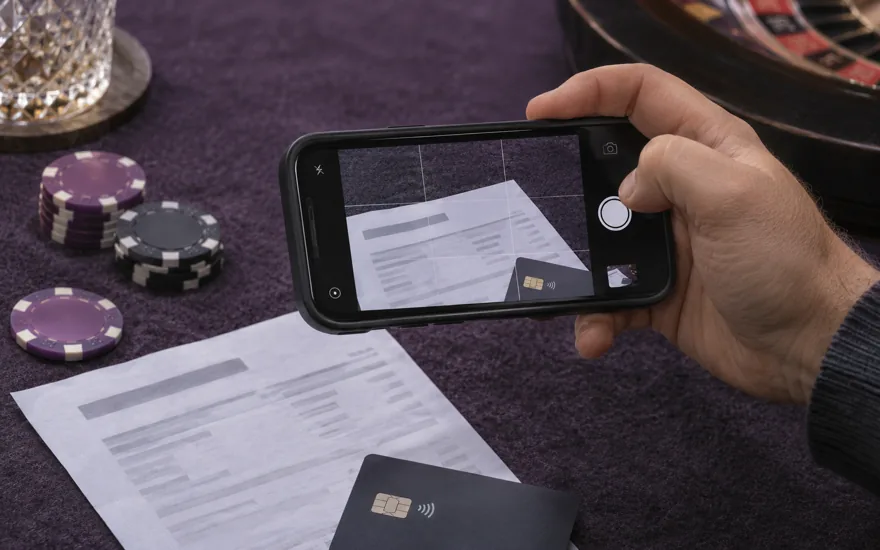
Make the document readable without oversharing
A clear image should show the required page edges, date and relevant account-holder details. Glare, cropped names or an unreadable reference can cause an otherwise relevant document to be rejected. Ask whether a downloaded statement is acceptable before photographing a screen.
Keep a private note of what you sent, when you sent it and the case reference. You do not need to circulate another copy to explain that submission occurred. Retain the acknowledgement so the next support agent can locate the existing upload.
If verification appears to repeat
Ask which earlier document was accepted and which detail remains unresolved. A request for payment ownership may differ from a completed age check; a request that repeats the same purpose should be explained. Avoid responding with a collection of unrelated documents.
Where the request concerns an expired or replaced card, explain the change and ask what alternative evidence is accepted. The replaced-card guide distinguishes a changed card number from a closed account without assuming the operator can use either destination automatically.
Connect the check to the withdrawal status
Ask whether the withdrawal is held pending the evidence, has resumed after acceptance or has already been released. Accepted documents do not establish that a transfer reached a bank. A completed payment needs its own reference and receiving-account check.
Use pending withdrawals for an outstanding operator decision, or completed but not received once sending is confirmed. If a request remains unexplained, put the specific issue into the operator's written complaints process rather than trying to bypass the check with a different payment method.
Ask what the document needs to establish
A verification request should be read as a question about a particular relationship. Identity, residential address, ownership of a payment account and the origin of a transaction are different subjects. One document may provide useful information for several subjects, but the reader should not assume that it satisfies every requirement. Ask the genuine operator what it needs to establish and which fields must remain visible in the evidence it accepts.
An identity document can help establish who a person is without showing that a particular bank account belongs to that person. A statement can identify an account holder without proving the status of a specific casino withdrawal. A transaction receipt can identify a payment without establishing every aspect of the customer's identity. Keep those scopes separate when deciding which question a requested file is intended to answer.
If you cannot supply the document in the requested form, explain what you have and ask which alternative the operator accepts for the same purpose. Do not create a substitute or change an account record to make it appear to contain a missing field. Ask support to confirm its accepted alternative and secure submission route in writing. This guide can help you frame the question, but the operator must assess the actual evidence.
Identify the genuine request before opening an upload route
Access the operator through a known app or saved official address and inspect the account's own support or verification area. An unexpected message can refer to a real withdrawal without being a trustworthy submission channel. Do not assume that a link is genuine merely because it contains the operator's name or reproduces part of your earlier correspondence. Establish the request through the account you already know.
Read what the upload process says about the file and its purpose. If the operator supplies a secure channel, use that process rather than a public review, social-media reply or an unfamiliar cloud-storage link. A document enquiry is not a request for the password that controls the account. One-time security codes, recovery codes and banking login details should not be sent as evidence of identity or ownership.
Keep the request's wording and its date with your own record. If you later need to ask why evidence was repeated, the original instructions are more useful than a general memory that support asked for ID. Record the submission channel separately from the file itself so you can describe what was supplied without forwarding the sensitive document to every person involved in a later conversation.
Make a legible copy without removing the information being checked
The relevant details must be readable in the file the operator actually receives. Before submission, inspect the image at a practical size and check that the required parts have not been cut off, blurred by movement or hidden by glare. A document can be present in a photograph while the field being checked remains unreadable. A larger file is not automatically more useful than a clear, correctly framed one.
Ask which information may be redacted before removing fields. Protecting unrelated transactions can be sensible, but excessive redaction may remove the account holder, statement date or identifier needed for the stated check. The correct approach is to establish the requirement through the genuine process, not to assume that every visible detail must be disclosed or that a heavily obscured page will always prove ownership.
Do not edit the underlying facts. Cropping an irrelevant margin is different from changing a name, amount, address or account identifier. If a record contains an error, ask the institution that issued it about correction and ask the operator what alternative evidence it accepts in the meantime. A document that looks convenient but misstates the account relationship undermines the very question verification is intended to answer.
Keep identity and payment ownership in separate parts of the case
An operator may already know who the customer is while still asking about a specific funding or receiving account. Conversely, a payment account can be identifiable while a separate customer-information task remains unresolved. Ask which check is outstanding rather than treating every request as proof that all earlier verification has been lost. A precise question can reveal whether support is discussing the same relationship you expected.
An accepted identity document does not settle a later question about a replaced debit card. The operator may still need to connect the old card record to your current bank account. The replacement-card guide explains which partial identifier and change date to keep. Ask support which part of that relationship remains unconfirmed for the existing withdrawal, so the next document addresses the outstanding question rather than repeating the completed identity check.
Keep each acknowledgement beside the task it concerns. A message confirming receipt of identity evidence should not be used as proof that a bank destination was approved, and a bank statement acknowledgement does not necessarily establish that the operator has finished reviewing it. This prevents support communication about one check being mistaken for a final answer to a different receiving-account question.
Keep upload confirmation separate from acceptance
An upload confirmation tells you that the process recorded a file or message. Keep it, but do not treat it as confirmation that the document was reviewed, accepted or linked to the withdrawal in question. Quote the wording accurately when following up. Saying a file was 'verified' when the message only says 'received' can make a later reply appear contradictory even though support is describing a different stage of the review.
If the account still shows an outstanding request, ask whether the submitted file has been linked to that task and whether any particular field remains insufficient. Do not immediately send multiple copies through different channels. Repeated submissions can make it harder to identify which file a response concerns, especially if the copies have different redactions, dates or image quality.
Record a clear version history for your own purposes. You might note that the first image was unreadable, a second copy was supplied and a later reply identified another missing field. Those are administrative steps, not three separate identity checks necessarily imposed from the beginning. Keeping the sequence clear helps a reviewer assess what was requested and how you responded without having to inspect every duplicate attachment.
Ask why the same evidence appears to be requested again
A repeated request should be compared with the earlier one before drawing a conclusion. The second request may concern another account, a different period, a field absent from the first document or the same file in a usable form. Ask which difference matters. A general response saying already sent may be understandable, but it does not help identify whether the operator is asking the same question.
If the wording genuinely repeats an already satisfied requirement, retain the earlier acceptance and ask the operator to explain what remains outstanding. Do not interpret a repeated request as permission to bypass verification with another payment account. Nor should a customer supply unrelated extra documents simply to make a larger evidence pack. The useful issue is the purpose of the request and the relationship it is intended to prove.
The Gambling Commission's identity guidance addresses requests that could reasonably have been made earlier. To ask how it relates to your case, record when the operator identified the need, when it requested the evidence and why it says the check is needed now. Keep those dated facts separate from your interpretation. They give support or a complaint reviewer something specific to assess without assuming that every later document request has the same justification.
A bank statement and a payment receipt answer different questions
A statement may show the account holder and a series of entries over a period, while a receipt may focus on one instruction. Ask which of those facts the operator needs. A receipt with an amount but no account-holder information may be useful for tracing a deposit without establishing ownership. A statement identifying an account can still leave a particular transfer unmatched if the relevant entry is absent or insufficiently identified.
When following up a deposit, keep the bank entry, the merchant request and the account-holder information distinct in your private notes. Each answers a different question; you do not need to publish the whole statement to describe them. Confirm the required fields and secure channel if support needs a copy. The pending-deposit page explains why a bank reservation or completed debit does not, on its own, show a credit in the casino account.
For an outgoing withdrawal, the receiving-account relationship may matter even where the original funding account is already understood. Do not assume that a statement submitted for a deposit automatically approves every proposed destination. Ask which account the existing request will use and what the operator needs to establish about it. A payment route should be explained through its records, rather than inferred from a general verified badge on a profile.
Describe a name or address change without rewriting older records
If personal details changed, record what changed and when. An old statement can correctly describe an earlier period while the operator holds current contact information. That does not mean the records can be silently edited to match each other. Ask the issuing institution and operator how they handle the legitimate change and what evidence they accept to connect the earlier and current details.
Keep the transaction's original details visible in the chronology. A profile update made after a payout was sent does not demonstrate that the outgoing instruction used the new information. Likewise, a corrected spelling does not by itself explain which receiving account was selected. Separate the administrative correction from the payment status so that the next reviewer can see whether one or both questions remain unresolved.
Do not use another person's records to make a mismatch disappear. Sharing an address or a device does not make two people's financial accounts interchangeable. Explain the genuine relationship and ask support what evidence it needs for your account. If the requested document belongs to somebody else, say so rather than presenting it as yours. Only the organisation reviewing the evidence can decide whether the accepted documents establish the relationship it needs to check.
Check what happens after the document is accepted
If a withdrawal remains pending, ask whether the document review is the outstanding task and whether anything else remains after it. A statement that verification is complete may resolve one dependency without establishing that an outgoing payment has been sent. Record the review result and the sending event separately. This avoids asking a bank to locate an instruction that the operator has not yet confirmed releasing.
The pending-withdrawal guide follows the sender-side task. Once an outgoing instruction is established, the completed-but-missing guide follows the recipient's record. Verification can be relevant to either conversation, but it should not replace the evidence needed to identify the specific payment. A verified account label is not a bank receipt or a wallet transaction identifier.
Do not make another deposit or continue gambling to demonstrate cooperation with a document process. New activity cannot prove the status of an existing review and can introduce additional account records. Respect spending controls and any applicable account restriction. The useful next step is a clear answer about the required evidence and the task it controls, rather than an experiment involving more money.
Ask for an unexplained request to be reviewed
If you cannot understand the purpose or timing of a request, ask for an explanation in writing. Identify the existing withdrawal or payment reference, the evidence already supplied and the particular question still unanswered. Keep the enquiry focused on what the operator needs and why it remains outstanding. A general accusation that all verification is unnecessary does not address the actual relationship under review.
Retain earlier instructions, submission acknowledgements and any acceptance or rejection. If a reason changed, preserve both replies with their dates. A reviewer should be able to distinguish a newly identified requirement from a repeated demand for the same missing field. Do not present your inference about the operator's internal process as a fact; describe what the messages and account records actually show.
If the explanation remains unclear, use the operator's genuine complaint process. Include the request, your submission history and the specific point you want reviewed. This guide cannot decide the case or guarantee payment or compensation, but those records let the relevant organisation assess what happened. Describe the issue without publishing identity documents or full statements. A public complaint does not need sensitive attachments to explain why you have asked for a review.
Keep account access secure during a stressful review
A delayed payment can make an urgent message feel credible, particularly if it promises that the last step will release the money. Verify the request through a known account route before following any unexpected instruction. Do not install remote-access software, disclose a one-time code or send a new payment to somebody claiming to complete verification on your behalf. Those actions are separate from submitting legitimate evidence through the operator's process.
Keep the original files in secure storage appropriate to their sensitivity, and avoid leaving unnecessary copies in a shared downloads folder or public link. If you create redacted support copies, label them clearly so you know which version was submitted. This helps prevent both oversharing and confusion about a missing field when the operator describes a file it received.
The publication itself does not accept identity documents or operate a verification service. Do not send records to its contact guidance in the expectation that an editor can approve an account or release a withdrawal. Ask the bank, wallet or operator through its genuine secure process. An editorial correction can describe an unclear passage without including private account evidence that belongs to a separate transaction case.
Record the review result and any payment still outstanding
When a review is completed, record which task was resolved and what the operator confirmed. If the payment remains pending, keep that as a separate outstanding stage. If a transfer was released, preserve its external reference and receiving details. The final chronology should not end with the broad phrase documents done if the original financial question still lacks a sending or receiving record.
Retain the minimum necessary evidence for your own purposes or an ongoing complaint, including the final explanation and relevant references. Resolution does not make a full identity or bank document suitable for public posting. A redacted description can explain what happened without revealing account access or unrelated financial activity. Keep the distinction between private proof and public commentary after the immediate stress has passed.
There is no need to make another gambling transaction to test a completed review. You can keep appropriate controls, leave the account unused or stop gambling. Verification explains an account relationship at a stated scope; it is not a recommendation to deposit, a promise about future payment times or evidence that a later game outcome will recover any loss. The useful result is a clear, limited record of what was established.
Give retained support copies neutral filenames where possible, so that a shared folder view does not reveal an account number or identity detail. Keep a private note connecting each filename to the relevant account or task and recording which version you submitted. That helps distinguish an original, a permitted redacted copy and a later replacement, even when their filenames are similar. Keep the note and files out of public links. You can explain a submission history to support using the reference and dates without exposing the contents of every document in the folder.
Questions that follow
Is payment verification the same as age verification?
No. The purposes can differ: identity, payment ownership and transaction status require different evidence.
Can I hide unrelated transactions?
Ask the operator which fields must remain visible and use permitted redaction. Do not obscure information needed for the stated check.
Will an accepted document guarantee immediate payment?
No. Document acceptance and payment release are different stages. Ask for the withdrawal’s current status.
Should I email my bank-login code?
No. Do not share credentials or one-time authorisation codes with support.
Sources & review
Published-source references, with check dates where recorded. No personal deposits, withdrawals or gameplay tests are claimed. Images illustrate the subject; they are not evidence of a tested account.
- www.gamblingcommission.gov.uk/public-and-players/guide/age-and-id-verification · checked
- www.gamblingcommission.gov.uk/licensees-and-businesses/lccp/condition/17-1-1-customer-identity-verification · checked
- www.gamblingcommission.gov.uk/blog/post/key-issues-and-our-expectations-concerning-account-withdrawals · checked