
Cashier fieldnotes
Casino deposit declined: identify the stopping point
 Partner offers · Country: United KingdomUpdated 11 November 2026
Advertising. Bonus amounts, ratings and review counts are supplied by advertisers and have not been independently verified. Check eligibility and current terms with the operator. 18+. These international campaigns have no dedicated GB offer; GB availability has not been confirmed.
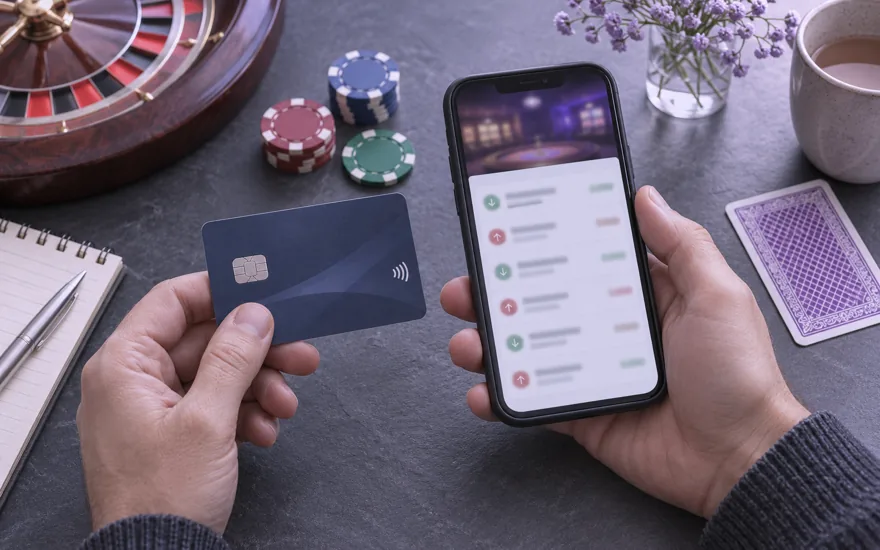
If a casino declines a deposit, the message alone may not explain why. Check the bank entry, then distinguish a cashier refusal, an issuer rejection and a deliberate spending control before considering another attempt.

Check whether the request reached the bank
Check whether the bank or wallet recorded the request. A cashier message shown before bank approval can describe a different event from the bank declining an authorisation. If a funding entry exists, read its own status as well as the casino's message. That tells you whether to ask the cashier about a refusal, the provider about a reserved amount, or the merchant about a debit already posted but not credited.
This is why a single list of causes cannot identify an individual refusal. The useful evidence is a matched attempt: the amount, time, currency, masked payment instrument and any reference. Record those fields before changing account details or introducing another payment into the investigation.
| Observed state | What it establishes | Next evidence |
|---|---|---|
| No provider entry | No matching visible entry has been found | Whether the instruction left the cashier |
| Pending entry | A reservation or unfinished instruction may exist | Capture, release or current transfer state |
| Settled entry | The provider has posted a debit | Merchant reconciliation reference |
Check the refusal in six actions
Start with the attempt already made. Keep its message and look for the corresponding bank or wallet entry before considering another deposit. There is no need to remove a spending control to follow these checks. If the bank and cashier disagree, give each organisation the reference and status it can identify, rather than asking a general question about why deposits sometimes fail.
An issuer challenge can be interrupted while another part of the instruction still has a recorded state. Use the pending-deposit guide if the provider has reserved or debited money. A generic failed screen does not establish that the provider’s entry is absent.
- Record the cashier message without making another attempt.
- Check the bank or wallet for a matching entry.
- Identify whether that entry is absent, pending, settled or reversed.
- Check ownership, product type and any stated payment restriction.
- Ask the organisation responsible for the recorded stage to identify the refusal.
- Retain the answer and reference before deciding what the existing instruction requires.
Was any money actually recorded?
Open the bank or wallet activity and inspect the transaction rather than only the available balance. No entry, a pending reservation and a settled debit require different investigations. Save the exact cashier message so support can compare the two sides.
If there is a pending entry, continue with pending deposits before retrying. If a debit has settled without credit to the gambling account, ask the operator to trace that payment. A failure message does not automatically mean there is a completed payment to refund.

Identify which side refused the request
A cashier may reject an instruction before passing it to the bank. An issuer may also decline a request without explaining the full reason to the casino. Operator help from Sky and tombola describes this limited visibility; support should not invent a bank reason it cannot see.
Ask whether the request reached the payment provider and whether an issuer response exists. Then ask the bank about its own refusal if appropriate. An account's deposit limit is a different decision from an issuer authorisation, even if the same short error message appears.
| Possible stage | Useful question | Avoid assuming |
|---|---|---|
| Cashier validation | Did the request leave the casino? | That the bank declined it |
| Bank or wallet authorisation | Did the provider reject or reserve the amount? | That funds were settled |
| Authentication | Was the bank confirmation completed? | That a closed window proves failure |
| Spending control | Did a limit or gambling block apply? | That another method is a suitable workaround |
Check the details without defeating a protection
Confirm that the selected amount, currency and payment instrument match what you intended. Read the expiry and account ownership details through the secure cashier. Correcting a genuine typing error is different from using someone else's card or changing services to avoid a restriction.
If a bank gambling block, self-exclusion or spending limit is responsible, stop. The deposit-limit guide explains how limits are counted. A request to remove a protection because you feel pressure to continue is a reason to use support, not to add more payment routes.

What if the banking confirmation was interrupted?
A network interruption can leave uncertainty about whether an instruction completed. Inspect the bank's status and casino history before doing anything else. A return page is only one screen in the journey; its absence does not prove the bank never authorised a payment.
Record the time, amount and masked instrument for the attempt. If you later retry after the status is clear, keep the attempts distinct in your notes. Several identical amounts on the same day can otherwise be mistaken for one failed deposit.
Ask about the specific declined attempt
Tell support that the cashier declined a particular amount at a particular time, and state whether the bank has no entry, a pending entry or a posted debit. Ask which side refused it and whether the operator captured any funds.
Do not send full card numbers or login codes to prove the attempt. A masked bank entry and reference should begin the investigation; a secure ownership-evidence route can be used if justified. Verification guidance explains how to ask about that purpose.
When the problem becomes a dispute
An uncredited settled debit should have a trace request and, if unresolved, a written complaint. An unrecognised payment should be raised promptly with the bank through its genuine channel. Those are different cases from a transaction you authorised and later regretted.
The refund guide separates those routes and explains why reimbursement is not automatic. Do not call gambling losses unauthorised simply because a session ended badly. Preserve the original payment record and give each organisation an accurate account of what happened.
Three practical causes require three different actions
If the problem is invalid or expired payment details, check the actual product through the genuine account or issuer channel. Do not send a card security code in an ordinary support message. The goal is to identify the incorrect field without exposing credentials or replacing an account unnecessarily.
If the problem is ownership, ask what evidence establishes that the payment instrument belongs to the account holder. Permission to use somebody else’s card is not the same as matching ownership records. The verification note distinguishes identity documents from transaction evidence.
If a spending limit, gambling block or other protective control caused the refusal, keep that control in place. Splitting payments or switching instruments to defeat it is not a valid troubleshooting step. An existing debit can still be investigated without approving another payment.
Find the entry for the method you used
For a debit-card instruction, the issuer can explain the card entry. A Pay by Bank instruction should be checked in the selected bank account’s payment history. A wallet adds its own activity record between the funding source and the merchant.
A PayPal or Skrill balance being available does not establish that a particular merchant payment was accepted. The relevant record is the instruction to that merchant. Product availability and the outcome of one attempted payment are different questions.
Promotional credit is another separate issue. If the cash deposit appears correctly but an expected reward does not, use offer conditions to check eligibility. A missing bonus should not be described as the provider declining the cash payment.
An example that keeps attempts separate
Imagine two hypothetical attempts of £10 each. The first is refused before any provider entry appears. The second produces a pending bank entry but no cashier credit. The equal amounts do not make the two attempts one transaction, and the first failure does not establish the outcome of the second.
Keep the time and reference for each attempt. Ask whether the second instruction was captured, reversed or remains pending. A support answer about the first instruction can be accurate while leaving the second question unanswered. That is a matching problem rather than evidence that the same money disappeared twice.
The example supplies neither a waiting deadline nor a refund entitlement. It shows why a short chronological record is more useful than repeatedly pressing the payment button. A new attempt adds another state to reconcile; it does not clarify an old one.
Check which available amount the provider used
A displayed account balance and the amount available for a new payment can differ because an earlier reservation remains open. Ask the issuer about the entry relevant to the attempted instruction. Do not assume that seeing a larger headline balance proves that the cashier caused the refusal.
Likewise, a payment limit can use a defined period or a defined type of transaction. A message saying limit reached needs the applicable rule and period, rather than a guess based on another day’s successful payment. Keep a protective limit in place while asking how it was applied.
When support gives an explanation, connect it to the recorded attempt by time and reference. If the explanation describes an older payment or another instrument, ask for that mismatch to be corrected. A correct general description of the bank’s policy can still fail to explain the instruction under investigation.
This creates a smaller, clearer evidence pack: the exact message, the relevant provider entry and the question about that entry. It avoids sending an entire financial history where one transaction and an applicable rule may be enough to identify the stage.
Keep the error message before interpreting it
Save the message with the requested amount, currency and attempt time. Note whether it appeared in the bank, payment service or cashier. A declined label can come from any of those stages, and seeing it on one screen does not necessarily tell you the reason. Ask which organisation supplied the refusal and connect its answer to that attempt before deciding who needs to act next.
If the message has gone, say that you no longer have it and describe your recollection as a recollection, not a quotation. Give support the reference or the time and amount it needs to search the original request. Do not recreate the screen or make another deposit to capture similar wording. A new screenshot would belong to a different instruction, whose outcome might not match the attempt you are trying to explain.
Separate a refusal message from a page that simply failed to load. The former reports a decision at some stage; the latter shows only that the browser did not display its next state. Before classifying either case, compare the funding account with the casino history. The pending-deposit guide is appropriate if an unresolved funding entry exists, even where the browser did not show a successful confirmation.
Establish whether the bank recorded an instruction
Inspect the individual transaction entries rather than relying on the total balance. Several unrelated payments can affect the amount available, and a pending entry can be different from a posted debit. Match the intended deposit by amount, date and merchant description. If the description names a processor you do not recognise, ask the bank to identify it instead of assuming that it belongs to this attempt.
An illustrative refusal investigation can produce three different observations: no relevant bank entry, an unresolved bank entry, or a completed debit with no casino credit. They should lead to different questions. The first concerns the unsuccessful request; the second concerns the status of the funding instruction; the third requires reconciliation between the sender and merchant. None is clarified by treating every visible balance reduction as a final charge.
Ask the bank to explain the entry it holds: is it pending, posted, released or in another stated status? Keep that answer with the casino's account record. The bank may be able to describe its own payment without confirming which casino balance was credited. Asking each organisation about the part it can see is more useful than expecting either one to reconstruct the whole journey from the other one's screenshot.
Respect a protection while checking the payment
A refusal related to a gambling block, self-exclusion or spending control should not be approached as an obstacle to bypass. Do not split the amount across different cards, switch providers or borrow an account to find a route that accepts it. Identify the control through the genuine organisation's information and keep the existing transaction question separate from any decision about future gambling.
If the message only says limit reached, ask which limit and what period it covers. The cashier's method range, a customer-set limit and the funding provider's own controls are different descriptions. A payment can sit within one range while still being refused for another reason. A page listing an operator's maximum does not establish the customer's remaining allowance or the bank's decision on that instruction.
Use the deposit-limit guide for reading the controls themselves. Here the useful next action is to identify whether an existing payment needs accounting for. A refusal does not require a new attempt to prove that the control works, and successful authentication does not create an entitlement to override the account's protective boundary. You can stop at the refusal and seek support without further payment.
Check input accuracy without exposing payment secrets
An incorrect detail can be a practical question, but check it only through the genuine account or payment interface. Do not copy a full card number, security code, wallet password or banking login into ordinary support chat. For an initial enquiry, a partial identifier and the request reference can describe the relevant account without giving another person the means to use it.
Read the selected payment instrument and currency as well as any manually entered fields. A device can remember an earlier option, and similarly named accounts can be easy to confuse. That observation does not prove that a remembered setting caused the refusal. Record what the actual request selected and ask the responsible organisation whether its record matches your intended instruction before describing the issue as a technical fault.
If a profile detail genuinely needs correction, use the institution's process for your own account. Do not change ownership information to make unrelated accounts appear to match. An administrative correction and a new payment are separate events. Keep their dates distinct so support can establish whether the corrected detail applied to the original request or only to later account information.
Keep authentication and account credit in different columns
An approval in a bank or wallet interface does not automatically establish that a casino credited a deposit. Conversely, the absence of a visible confirmation after returning to the cashier does not by itself establish that the funding provider refused. Record the last completed action: whether the security prompt was reached, whether you approved it and what happened when control returned to the merchant.
In an illustrative interrupted journey, the reader approves the amount in the bank app and then encounters an error at the casino. The useful evidence is the bank instruction together with the merchant request, not another approval generated by pressing deposit again. Ask which stage failed and whether the original payment remains pending, was rejected or was received without being matched to the gambling account.
Describe the last screen and action you actually saw. A blank page does not tell you which security check or payment step failed, so avoid naming a technical cause from that symptom alone. Ask the bank, payment service or operator to explain its own entry and how it relates to the request. A factual sequence gives support a clearer starting point than a confident diagnosis unsupported by either history.
Do not let repeated attempts merge into one unexplained amount
If several attempts have already occurred, list them separately using the time, requested amount and any reference supplied. Mark which attempt has a funding entry and which has a casino entry. A combined balance difference can be misleading where one request was refused, another remains unresolved and a third was credited. The task is to match instructions, not to treat all similar amounts as one payment.
An illustrative comparison may show two requests for the same value but only one posted bank debit. That does not mean both deposits should appear in the casino balance. Establish which request the debit belongs to and ask the merchant about that corresponding entry. If one reservation later disappears, connect the change to its original attempt rather than automatically calling it a refund of the other payment.
Once the separate records are clear, stop generating new ones as a diagnostic method. Ask the organisation holding the unmatched entry to explain it. The debit-card guide and bank-payment guide describe their respective evidence boundaries. They do not recommend test deposits or promise that changing the method will resolve a refusal already recorded elsewhere.
Say whether the request was refused or money is missing
State the event accurately in the first sentence. If the casino refused a request and no funding entry exists, ask about that refusal. If money was debited but not credited, identify the outgoing entry and request reconciliation. If the funding record remains unresolved, ask the provider to explain its status. These descriptions give support a more useful task than the general statement that a deposit is broken.
Include the amount, currency, date, payment method and relevant reference, plus a redacted copy of the specific entry if requested through a genuine secure channel. Avoid attaching an entire statement just to show that you have checked it. Ask what evidence is needed and keep unrelated transactions, account identifiers and personal details out of an ordinary public message or review.
A ticket number confirms an enquiry, not the deposit's outcome. When a reply arrives, check that it refers to the right attempt and answers the question about its status. If it explains another payment or a general limit instead, quote the original reference and identify what remains unanswered. Keep any confirmed facts in the chronology, so the next person can continue from the gap rather than repeat the investigation.
Record the outcome without making a test deposit
A resolved refusal case can end without any new casino payment. The useful outcome might be an explanation of the control, confirmation that no debit occurred, release of an unresolved entry or credit of a payment that was already sent. Record the actual outcome rather than writing only that the deposit eventually worked. Those different conclusions account for different records.
If money was returned, keep the return reference beside the original instruction. If no funds moved, retain the explanation without inventing a refund entry. Where several attempts were involved, close only the ones whose outcomes are established and identify any remaining unmatched record separately. This prevents a later statement review from confusing a resolved refusal with a different transfer that still needs investigation.
Technical availability is not a reason to increase gambling spend. You can retain an appropriate block, leave a method unused or stop gambling after the enquiry. A successful account correction does not make a fresh payment affordable, and further play cannot establish what happened to the refused instruction. The record should answer the payment question without turning the investigation into another deposit session.
If support says the method is available again, ask separately what happened to the old entry. Restored availability does not show that a reservation was released or a posted debit returned. Keep the original reference and ask for the adjustment or explanation which accounts for it. There is no need to test the restored option: a successful later deposit would be another instruction and would not establish the outcome of the earlier attempt.
Questions that follow
Why did the casino decline my card when I have money?
A balance is only one factor. Ask whether the issuer, authentication stage, cashier rules or a spending control refused the request.
Should I keep trying until it works?
No. First check whether earlier attempts created pending entries and whether a deliberate control is responsible.
Can the casino explain every bank decline?
Not always. The issuer may not disclose a detailed reason to the operator; the bank can explain its own decision where appropriate.
Can a declined casino deposit still show in my bank account?
A pending reservation or separately settled instruction can coexist with a cashier error. Check the provider status and match the reference.
Should I make several smaller deposits after a refusal?
No troubleshooting step requires defeating a limit or block. Identify the original instruction and the reason before another payment.
Sources & review
Published-source references, with check dates where recorded. No personal deposits, withdrawals or gameplay tests are claimed. Images illustrate the subject; they are not evidence of a tested account.
- support.skybet.com/app/answers/detail/deposit-queries · checked
- www.tombola.co.uk/help/payments/common-depositcard-payment-issues · checked
- www.nationwide.co.uk/help/payments/pending-transactions · checked
- www.gamblingcommission.gov.uk/blog/post/changes-to-customer-led-tools-financial-limits · checked
- www.nationwide.co.uk/help/payments/disputing-a-payment · checked