
Cashier fieldnotes
Pay by Bank casino payments: consent and settlement
 Partner offers · Country: United KingdomUpdated 11 November 2026
Advertising. Bonus amounts, ratings and review counts are supplied by advertisers and have not been independently verified. Check eligibility and current terms with the operator. 18+. These international campaigns have no dedicated GB offer; GB availability has not been confirmed.
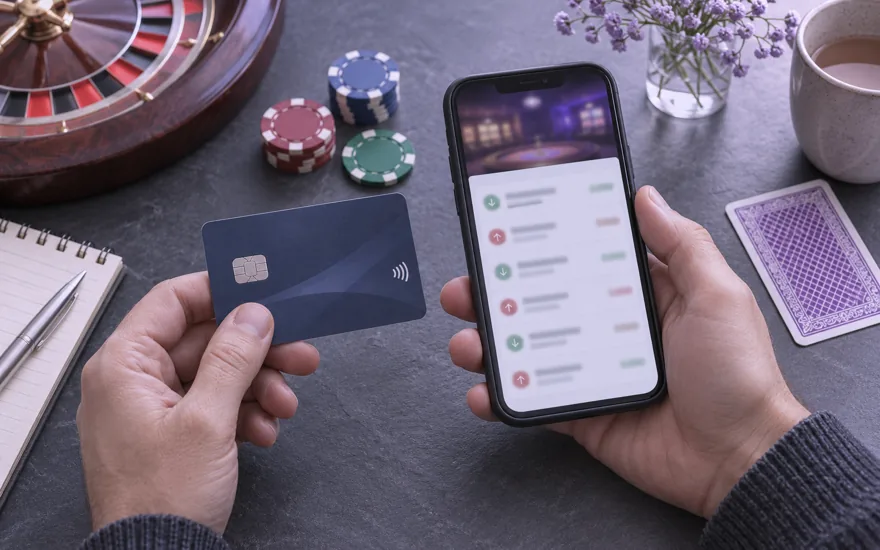
Pay by Bank casino payments are authorised through a banking journey rather than by entering a debit-card number. Deposit support and a bank payout remain separate capabilities, so check both in the selected cashier.

Pay by Bank: check deposit and withdrawal support separately
Trustly describes itself as a payment service provider and states that the merchant chooses which of its services are available. Its deposit guide starts at the merchant checkout, continues through bank selection and bank approval, then returns to merchant confirmation.
Trustly describes withdrawal as a separate request made at the merchant. Check that option independently of its deposit service. A Pay by Bank deposit button tells you how funding can begin, but does not confirm that the merchant also offers the same provider for payouts or that the receiving account qualifies. A comparison table needs evidence for each direction.
| Verified provider point | Practical meaning |
|---|---|
| Merchant chooses available services | Support cannot be inferred from the provider name alone |
| Approval takes place through the bank | Check the intended account and amount before confirming |
| Withdrawal request begins at merchant | Operator dispatch is a separate stage from bank receipt |
Follow the provider's published checkout steps
The steps are adapted from Trustly’s public checkout guide. They are a route description, not a screenshot or a claim that every British casino uses Trustly. Another named Pay by Bank service can have its own bank-selection and confirmation flow.
If bank approval succeeds but the account is not credited, retain the bank’s confirmation and the merchant’s transaction identifier. Do not infer a failed payment merely from a missing return screen. The pending-deposit page explains how to reconcile the two records.
- Start at the genuine merchant’s deposit or checkout page.
- Select the Trustly or Pay by Bank option actually displayed.
- Choose the bank and the intended account.
- Check the payment amount and currency.
- Approve using the bank’s own security method.
- Return to the merchant and retain its confirmation or status.
What does Pay by Bank mean on a cashier?
The label describes a bank-based checkout journey, but the service behind it can differ between operators. Trustly is one provider used in gambling payments. Its own guidance distinguishes the payment service from the casino that controls the gambling account and withdrawal decision.
Read the provider name and receiving merchant before you approve the instruction. A bank authorisation should show the amount and relevant payment details. If the destination or sum differs from what you expected, stop rather than treating the change as a routine part of the deposit.

Follow the confirmation back to the account
After authorising through the genuine bank service, return to the cashier and read the transaction status. Keep the bank reference and the casino reference separately. An interrupted return page does not establish whether the bank sent the instruction or whether the casino credited it.
If the bank shows a debit but the gambling balance has not changed, follow the pending-deposit guide. Do not send the same amount repeatedly just to obtain a success page. Several similar transfers can make it harder to identify the original problem.
- Read the selected provider, amount and currency.
- Authorise only through the genuine banking channel.
- Record the bank’s confirmation or failure status.
- Check the cashier transaction history after returning.
- Keep both references if the two records disagree.
A bank payout needs its own check
A casino accepting a bank deposit does not automatically promise a bank withdrawal through the same provider. Confirm the receiving account and whether it must match the account that funded the deposit. Published bet365 en-GB help describes a same-bank Pay by Bank return route for its configuration.
If your operator uses another arrangement, ask for its actual route rather than quoting that example as a rule. The account must be able to receive the currency and payment type. A closed bank account needs attention before an outgoing instruction is sent.

What should the record contain?
Record the outgoing amount and currency, account ending, provider, request time and current stage. A payment-service reference may help identify the bank transfer, while the operator's own number identifies its withdrawal request. Ask which reference the receiving bank should use.
Do not disclose online-banking credentials, full security answers or authorisation codes in casino chat. If account ownership needs evidence, use a secure document route. Payment verification covers appropriate redaction without obscuring the details required to identify the account.
| Question | Useful evidence |
|---|---|
| Was the deposit authorised? | Bank confirmation and status |
| Was the gambling account credited? | Cashier ledger entry |
| Has a withdrawal been released? | Operator’s payment confirmation |
| Where was it sent? | Masked receiving account and currency |
| Who can trace it? | Provider or bank reference relevant to the route |
Instant branding does not set every clock
An online authorisation can be quick while later checks or receiving-bank processing take longer. Separate the operator's decision from the transfer after release. Neither the method name nor the speed of an earlier deposit guarantees the timing of a future withdrawal.
If the operator still holds the request, use pending withdrawals. If it confirms sending the payment, use completed but not received. Ask for a dated explanation instead of treating every delay as an open-banking fault.
Compare the total route and its controls
Read the operator's fee and any bank or conversion cost separately. Pay by Bank is not a promise of free payments, and it does not remove identity or ownership requirements. Fees and currency provides a record format for comparing the amounts at each end.
Bank gambling blocks, deposit limits and self-exclusion remain relevant. A new bank-based checkout should not be used to bypass a restriction. Return to the payment-method overview if you need to understand the differences between a bank transfer, a debit card and an electronic wallet.
Compare a bank route with card and wallet records
A card instruction is normally found in the issuer’s card history. A bank-authorised instruction belongs to the selected bank account’s payment record. A wallet introduces another account. These locations determine where evidence can be found when a deposit or payout needs tracing.
Compare debit-card payments and PayPal receipts using the same amount, currency and direction. The number of intermediaries does not by itself establish a fee or a receiving time; use the terms displayed for each actual route.
For a request still awaiting dispatch, use the pending-withdrawal guide. For an instruction already released but absent from the destination, use payment tracing. This avoids treating operator review and bank posting as one undifferentiated delay.
If approval or reconciliation fails
An interrupted bank challenge, unsupported account or payment restriction calls for an explanation of the relevant stage. Ask whether approval occurred and whether the instruction was accepted, rejected or later returned. A screenshot of a loading page cannot establish those financial states.
Use the verification guide if account ownership evidence is requested. Read offer conditions separately if the question concerns promotional eligibility. A funding service can work while a specific offer has a different qualifying rule.
Find the provider behind the Pay by Bank option
Read the provider name on the payment option before following its instructions. Pay by Bank is a checkout description, not the name of one service with identical conditions everywhere. A bank may appear through different arrangements, and a provider may offer several services to a merchant. Keep the actual provider's name beside the deposit reference so that later questions go to the organisation involved in that instruction.
Trustly's public guidance distinguishes the merchant from the payment provider and says that the merchant chooses the services it offers. That distinction helps frame the question without claiming that every British casino uses Trustly or that a particular service is available in your account. If another provider is named, follow that provider's genuine information rather than importing Trustly's interface descriptions, eligibility or support instructions into the comparison.
An account-specific check should establish the provider, the bank account selected, the amount and currency, and the merchant that should receive the deposit. A screenshot of a generic bank logo does not supply those details. If the route does not identify a service clearly enough for you to understand whom you are authorising, stop and ask the merchant to explain the option before approving an instruction.
Check bank approval and cashier credit separately
Bank approval, return to the merchant and credit in the casino account are separate steps, even when the browser moves between them quickly. Keep the amount and merchant details shown when you approve the request. After returning, find the matching entry in the casino's own payment history. Comparing those two records is more useful than relying on the fact that the bank app closed or the cashier page reopened.
For an illustrative interrupted journey, a reader approves in the bank app but the browser fails before showing the casino's confirmation. The first question is whether an outgoing instruction and a merchant request exist, not whether pressing the deposit button again will produce a cleaner screen. Compare the bank record and casino history. If either record has a reference, retain it and ask the relevant organisation what stage that reference identifies.
An error after returning can concern the display, matching of the payment or another stage that is not visible to the reader. Do not invent the technical cause from the error wording alone. Describe the last completed action and the records you can see. This gives support a narrower starting point than a general statement that the bank transfer failed, particularly where the funding account already shows an entry.
Check the selected bank account rather than the device's usual default
A reader may hold several accounts at the same bank or use a device that remembers a previous selection. Before authorising, confirm which account is selected for this instruction. Similar account names and familiar colours do not establish that the intended account is being debited. The relevant details are the actual account designation and the payment presented by the genuine bank interface.
Ownership is separate from access. Being able to view an account on a device does not settle an operator's question about whether the gambling-account holder owns the funding or receiving account. If that question arises, use the genuine secure process and ask what evidence is required. Do not resolve a mismatch by changing details to imitate another holder or using someone else's account for a new attempt.
If you selected the wrong account, keep the details of that payment and ask the bank or merchant about it. Choosing a preferred account later does not change an instruction already made. Treat the account preference, any access permission and the individual transfer as separate matters. Otherwise, a change on the profile screen can be mistaken for a reversal even though the original bank entry still needs an explanation.
Read what the approval screen is asking you to do
Read the action described on the genuine bank or provider screen. Permission to access account information and approval to move money are different requests; do not treat every prompt as another name for a deposit. The wording of the service you are using matters. If it does not clearly identify what you are approving, stop and ask that service to explain the request rather than assuming it matches a previous checkout.
Keep a note of the service name if you later need to ask about access. A payment can remain a real completed instruction even after an access permission or device session changes. Conversely, a permission being present does not demonstrate that a particular deposit reached a merchant. Ask the provider which record confirms the transfer itself and which record merely concerns access or authorisation.
Do not share bank credentials with a casino support agent to demonstrate that you approved a request. Genuine account investigation should use the institution's secure channel, not remote access supplied to an unknown caller. A statement or confirmation can often describe the event without disclosing how to log in. Ask which non-secret fields are required and keep one-time codes, passwords and recovery information out of the evidence pack.
Separate a bank deposit from a bank payout
The availability of a bank-payment option for deposits does not establish that the same provider carries withdrawals. A casino can offer one service for funding and a different supported arrangement for receiving money. Read the selected withdrawal route independently. Ask which account is eligible, what ownership relationship must be confirmed and whether the operator has already sent a particular instruction through that route.
An operator's statement that a withdrawal was approved may refer only to its own review. Ask whether an outgoing bank transfer has been released and obtain the corresponding date, amount, currency and trace information. A bank cannot necessarily locate a future instruction using a casino request number. If the operator has not yet sent the payment, the outstanding task remains on the sending side rather than becoming a missing bank credit.
Once a bank payout has been sent, use the receiving-stage guide to compare the intended destination with the actual account record. Do not assume the account used for a deposit is automatically the one chosen for a withdrawal. Confirm the selected destination on the specific request. A bank account shown somewhere in a profile is weaker evidence than the destination attached to the outgoing instruction.
Ask which stage an instant label describes
A route described as instant can still involve several distinct actions: customer approval, the bank's record, the merchant's confirmation and the display of a usable account balance. The label does not explain every possible interruption or the time the operator spends reviewing an outgoing withdrawal. Ask which part of the journey a published description covers before comparing it with another method.
Record the time you made the request separately from the time you approved it and the time the merchant recorded it. If your bank and the merchant display different date conventions or time zones, keep that difference in the chronology instead of rearranging events to make the labels match. A transfer crossing midnight can appear under different dates without automatically being a different instruction.
One provider's timing or one earlier successful payment does not set a deadline for every bank route. Check the selected service, the conditions of the account and the stage now waiting. Ask the organisation handling that stage what must happen next and which record will show it. Timing another fresh deposit would create another instruction; it would not explain the pause in the payment you are already trying to follow.
Compare charges at the account and merchant boundaries
Record any merchant charge separately from a charge or conversion supplied by the bank or payment service. A provider describing one part as free does not establish that another organisation applies no cost. A comparison should also preserve the currencies involved, because a numeric difference between different currency amounts cannot be interpreted as a fee without the associated conversion information.
If the route shows a quote before authorisation, keep the quoted amount and the account expected to be debited. After the payment, compare the completed record with that quote. If they differ, ask the service that supplied the relevant figure to explain the calculation attached to the instruction. Do not replace it with a later internet exchange-rate result and assume the difference proves an undisclosed charge.
The fees and currency page explains this record-based comparison in more detail. Here the important boundary is the one between the bank account, the payment service and the casino ledger. Each can display a useful amount, but those amounts may describe different events. Keep unknown conditions as questions for the selected route rather than inventing universal limits or total-cost rankings.
Diagnose an unsuccessful journey without multiplying instructions
If the bank app closes or the merchant page remains on a spinner, start by checking whether a bank entry exists. Then compare the merchant transaction history for the original request. Do not assume that an absent success screen means nothing happened. A second attempt for the same amount can create a separate instruction and leave two records that are difficult to distinguish later.
If the bank shows no relevant entry and the merchant reports a refusal, ask which organisation refused the request and what the message means. If the bank shows an unresolved entry, follow the pending-deposit route. If money left the account but the merchant cannot identify a credit, retain the outgoing reference and ask for reconciliation. These observations call for different enquiries even when the original button was the same.
Respect account controls throughout the investigation. A gambling block, self-exclusion or spending boundary is not a display error to work around through another bank or provider. If the reason for a refusal is unclear, ask the relevant organisation to explain its own control. The purpose of troubleshooting is to account for an existing payment, not to discover a route that defeats a protection.
Write about one bank instruction at a time
Open the message with the deposit or withdrawal reference and the answer you need. Give its amount, currency, date and current status, then explain what the bank shows and what the merchant shows. Supply the evidence for that difference through the genuine secure channel. There is no need to make support search an entire unlabelled history before it can see which instruction, entry or missing credit you are asking about.
Ask what reference a receiving organisation can use. An internal casino request number, the payment provider's identifier and the bank's own reference may serve different purposes. Keep their labels intact instead of copying them into one field called transaction ID. If support supplies a new reference, ask whether it identifies the original payment, a rejected attempt, a return or a separate replacement instruction.
When a reply arrives, check whether it answers the question you asked. A confirmation that documents were received does not necessarily confirm that a bank payout was released. An assurance that a bank is supported does not establish that a particular payment reached the merchant. Acknowledge the confirmed point and ask for the missing fact, keeping the chronology readable for the next reviewer.
Record the payment's final outcome
Write the outcome in terms of the payment: credited, returned, rejected or received in the intended account. An access permission being restored or a preferred account being changed does not, by itself, settle that question. Keep any unmatched transfer open as a separate enquiry and ask for its final entry. This avoids describing the bank route as fixed while an earlier instruction is still unexplained among later account changes.
Preserve the final explanation together with the original reference and any related return reference. This helps if a later statement entry appears connected to the case. It also prevents a returned payment and a subsequent instruction being counted as two independent missing amounts. The relationship should be supported by the organisations' records, not inferred merely because the amounts happen to match.
There is no need to make another gambling payment to confirm that an investigation is over. You can retain appropriate limits or blocks, stop using the route and keep only the evidence required for your purposes or an ongoing complaint. A clear bank record establishes what happened to an instruction; it does not establish that a future deposit is affordable, desirable or guaranteed to follow identical conditions.
If the final explanation uses an unfamiliar provider name, ask how that provider relates to the merchant option you selected. Record the answer beside the original receipt so that a later statement description can be recognised without guesswork. This is an identification exercise, not permission to accept a new payment request from an unknown sender. Continue to use the bank, merchant or provider through a known route, and do not treat an unexpected call offering to release a bank transfer as part of the original authorisation. The existing reference should explain an existing instruction, rather than become the pretext for another payment.
Questions that follow
Is Pay by Bank the same as a debit-card payment?
No. A bank-based instruction and a card authorisation use different payment routes even when the same current account funds them.
Does Trustly approve my casino withdrawal?
The operator controls its withdrawal decision. The payment provider can help with the transfer stage when a payment has been identified.
Does a bank deposit remove verification?
No. The operator may still need identity or account-ownership evidence under its requirements.
Does a Pay by Bank deposit prove I can withdraw with it?
No. The provider says the merchant chooses which services are available, and payouts need separate confirmation.
Where do I start a Trustly deposit?
Trustly’s public guide says to start from the genuine merchant checkout, select the displayed bank-payment option and approve through the bank.
Sources & review
Published-source references, with check dates where recorded. No personal deposits, withdrawals or gameplay tests are claimed. Images illustrate the subject; they are not evidence of a tested account.